

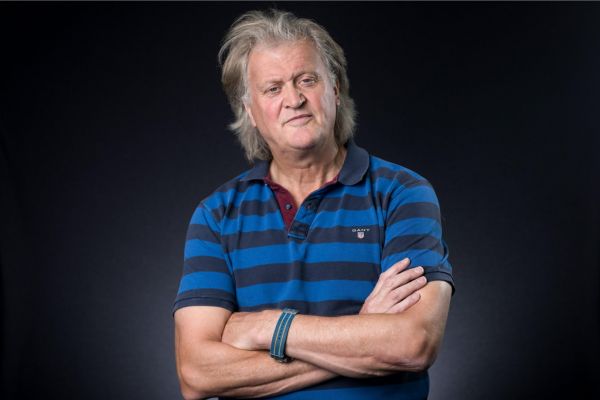
There are plenty of businesspeople in Britain who have built successful companies. But very few have reshaped an entire industry, sparked a national conversation about drinking culture, and become a household name all at the same time. Tim Martin founder and chairman of JD Wetherspoon — has done all three. His journey from a young law graduate with no hospitality experience to the man behind the UK’s most recognisable pub chain is, by any measure, an extraordinary one. It is also a story well worth telling properly.
Who Is Tim Martin?
Sir Timothy Randall Martin was born on 28 April 1955 in Norwich, England. His upbringing was anything but ordinary. His father served in the Royal Air Force before moving into the drinks trade with brewing giant Guinness, eventually becoming the company’s marketing director in Malaysia. As a result, the Martin family relocated frequently Tim attended no fewer than eleven schools across New Zealand, Northern Ireland, and the UK during his childhood. It was an itinerant youth that, by his own account, taught him resilience and the ability to adapt quickly to new environments.
Tim Martin went on to study law at the University of Nottingham, graduating with an LLB and later qualifying as a barrister in 1979. However, the courtroom held little appeal for him. Instead, he worked briefly on a building site in Hertfordshire and spent time as a sales representative for The Times. Neither path felt right. Then, in 1979, he took a decision that would change everything — he bought a pub.
The Birth of Wetherspoons
A Single Pub and a Determined Vision
Tim Martin’s first venture was a modest establishment in Muswell Hill, north London, which he originally called Martin’s Free House. The name did not last long. In 1980, he rebranded it as Wetherspoons a deliberate nod to a teacher who had once told him he would never make it in the pub business. That teacher’s name was Mr. Wetherspoon, borrowed from a character in the American sitcom WKRP in Cincinnati. The name stuck, and the attitude behind it a quiet determination to prove the doubters wrong would come to define Tim Martin’s entire career.
What Made Wetherspoons Different
From the outset, Tim Martin ran his pubs on a philosophy that was refreshingly simple: good quality at genuinely affordable prices, served in large, welcoming spaces. He was not interested in replicating the tired formula of the traditional British boozer with its cramped rooms and limited menu. Instead, he targeted old banks, former cinemas, and disused theatres buildings with grand interiors and plenty of room — and converted them into open, inclusive venues where anyone could feel comfortable spending an afternoon.
This value-first approach resonated deeply. Students, pensioners, families, shift workers, and professionals all found something to like. Wetherspoons was not trying to be aspirational. It was trying to be useful, and that proved far more powerful in the long run.
Building an Empire: The Growth Years
From North London to Nationwide
Throughout the 1980s, Wetherspoons expanded steadily across north London before pushing into the broader UK market. By 1992, the company had grown sufficiently to list on the London Stock Exchange as JD Wetherspoon plc a milestone that provided the capital needed for serious national expansion. Tim Martin pressed on relentlessly. In July 1998, Wetherspoons opened twenty new locations in a single month, with seven launching on the same day. By the turn of the millennium, the chain had surpassed 400 pubs. By 2008, that figure had climbed to 800.
The Man Who Still Walks the Floor
What sets Tim Martin apart from many chief executives is his hands-on approach. Even now, as chairman of a company employing tens of thousands of people, he personally visits at least fifteen Wetherspoons outlets every single week. He talks to staff, listens to customers, and pays close attention to what is working and what is not. It is a management style rooted in genuine curiosity rather than box-ticking, and it has helped the business maintain a consistency of quality that competitors often struggle to replicate at scale.
Tim Martin the Public Figure
Brexit and Beyond
Tim Martin has never been a man who keeps his opinions to himself. His outspoken support for Brexit brought him into the national spotlight in a way that pure business success rarely does. He campaigned actively for Leave, published pro-Brexit material distributed through Wetherspoons outlets, and used his platform as a major employer to make his political views plain. Not everyone agreed with him, and the debate around his stance was often fierce. But it would be difficult to accuse him of inconsistency — he has never wavered.
During the COVID-19 pandemic, he was equally forthright. He argued publicly that the government’s decision to close pubs was excessive, suggesting that social distancing measures could have been sufficient to keep venues open. Once again, his comments generated controversy. Yet they also reflected a genuine concern for the thousands of workers whose livelihoods depended on the hospitality sector surviving intact.
A Knighthood Well Earned
In January 2024, Tim Martin received one of the most prestigious honours the British establishment can bestow. He was awarded a knighthood in the King’s New Year Honours List officially becoming Sir Tim Martin in recognition of his services to hospitality and culture. It was a recognition not merely of commercial success, but of the cultural role that Wetherspoons has played in British life. For many people, a Wetherspoons is not just a place for a cheap pint. It is a community anchor, a meeting point, and sometimes the only affordable hospitality option on a struggling high street.
Tim Martin’s Personal Life
A Private Man at Heart
Despite his very public profile, Tim Martin is notably private when it comes to his personal life. He met his wife, Felicity (née Owen), while they were both students at university, and the couple have been married for decades. Together, they have four children. The family lives in Exeter, Devon, and Tim is known to prefer a low-key lifestyle that sits at odds with the scale of his wealth.
He does not court celebrity. He does not collect sports cars or court the gossip columns. Instead, he channels his energy back into the business, into the staff who run it, and into the broader debates about the future of British hospitality. In one interview, he famously declared that he was “born to work” and had no intention of retiring until he was 104. Given everything he has achieved so far, it would be rash to bet against him.
Tim Martin’s Net Worth
Tim Martin’s financial success is substantial by any measure. His net worth is widely estimated at around £448 million, driven primarily by his significant shareholding in JD Wetherspoon plc. Unlike many billionaires and multimillionaires who diversify aggressively into property empires and investment portfolios, Martin has remained firmly focused on his core business. He has consistently reinvested in Wetherspoons rather than cashing out, a decision that reflects both his confidence in the brand and his deep personal commitment to what it represents.
Why Tim Martin Still Matters
It would be easy to reduce Tim Martin to a set of headlines the Brexit cheerleader, the pub king, the man who opens venues in old post offices. But that would miss the point. What makes him genuinely interesting is the combination of vision, stubbornness, and commercial intelligence that he has sustained over more than four decades. He saw an opportunity in affordable, unpretentious hospitality at a time when the pub trade was either going upmarket or quietly dying. He backed himself when most people in his position would not have dared.
Furthermore, Tim Martin has built something that genuinely matters to people’s everyday lives. Wetherspoons is not a luxury brand. It does not appeal to any particular demographic. It belongs, in a very real sense, to everybody and that is a far harder thing to create than it looks.
Whether you admire his politics or not, and whether you prefer your pint in a Wetherspoons or somewhere rather more refined, the story of Tim Martin is one of British entrepreneurship at its most compelling. A man with no experience, a lot of nerve, and an unshakeable belief in the value of a decent, affordable pub changed the face of British drinking culture. That, at least, is not in doubt.
