

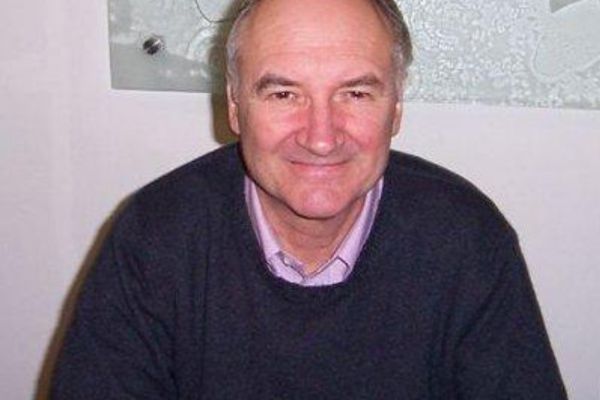
British television has produced no shortage of remarkable performers over the decades, but few have managed to sustain the kind of genuine, lasting affection that Michael Keating earned throughout his career. He was never the leading man with his face plastered across billboards or the celebrity whose name trended on social media. Instead, Michael Keating was something arguably more valuable a consummate character actor whose presence elevated every scene he stepped into, and whose work resonated with audiences across generations.
From Edmonton to the Stage: The Making of an Actor
Michael Keating was born on 10 February 1947 in Edmonton, Middlesex, in north London. Growing up in a working-class household, he developed an early passion for the craft that would define his entire life. He pursued that passion seriously, training at the prestigious Guildhall School of Music and Drama from 1964 to 1966 an institution that has shaped some of Britain’s finest theatrical talent.
After graduating, Keating immersed himself in the world of repertory theatre, spending nearly three years at Nottingham Playhouse under the artistic direction of John Neville. It was formative work. He shared the stage with established names like Robert Ryan, Dulcie Gray, and Michael Denison, absorbing the discipline and range that only live theatre can truly teach. From there, he performed across some of Britain’s most respected venues the Library Theatre in Manchester, the Lyceum Theatre in Edinburgh, the Lyric Theatre in Belfast, and numerous touring productions throughout England. By the time he arrived on television screens, Michael Keating was already a seasoned, confident performer.
Blake’s 7: The Role That Defined a Generation
In 1977, Michael Keating landed a guest role as Goudry in The Sun Makers, a Doctor Who story that gave him his first taste of BBC science fiction. It was a modest appearance, but it clearly left an impression. Just weeks later, he was cast in a brand-new BBC drama that would become a cultural phenomenon Blake’s 7.
Vila Restal: A Character Unlike Any Other
Blake’s 7 aired from 1978 to 1981 and was the brainchild of Terry Nation, the writer who had also created the Daleks for Doctor Who. Nation famously pitched the show to the BBC as “The Dirty Dozen in space” a band of intergalactic misfits and criminals fighting against a tyrannical galactic federation. Michael Keating played Vila Restal, a self-confessed coward with a sharp wit, a genius-level IQ, and an extraordinary talent for cracking locks and bypassing security systems.
Vila was a deeply layered character. On the surface, he was the group’s comic relief — nervous, self-serving, and perpetually convinced that every mission was going to get him killed. Beneath that, however, he was remarkably capable, fiercely loyal when it mattered most, and genuinely human in a way that many of the show’s more heroic characters simply were not. Keating brought warmth, comic timing, and unexpected emotional depth to the role. It is no exaggeration to say that Vila Restal became one of the most beloved characters in the history of British science fiction television.
Crucially, Michael Keating appeared in all fifty-two episodes of Blake’s 7 the only member of the cast to achieve that distinction. That alone speaks volumes about the character’s importance to the series and about Keating’s professionalism throughout the production.
The Legacy of Blake’s 7
The show ended in 1981, but Vila Restal never really went away. In the late 1990s, Keating reprised the role for BBC Radio 4, appearing in audio dramas that brought back much of the original cast. Then, from 2011 onwards, he returned to the character repeatedly through Big Finish Productions, a company renowned for its high-quality audio adaptations of classic British science fiction. Fans who had grown up with Blake’s 7 in the late seventies found themselves reunited with Vila decades later, and the response was enormous. Peter Anghelides, an audio producer at Big Finish, described Keating’s contribution warmly, noting his exceptional comic timing in the recording studio and his cheerful, generous presence on studio days.
A Career Far Broader Than One Role
It would be easy and rather unfair to reduce Michael Keating to a single performance. The truth is that his television work spanned an impressive range of genres and productions across more than five decades.
EastEnders and a New Generation of Fans
Perhaps the most significant chapter of his career after Blake’s 7 came when he joined EastEnders in 2005, playing the Reverend George Stevens. The role could hardly have been more different from Vila Restal. Reverend Stevens was a gentle, principled clergyman who ministered to Dot Cotton one of the soap’s most iconic and beloved characters over the course of twelve years. The two characters formed an unexpectedly moving relationship, and Keating brought a quiet authority and tenderness to the role that introduced him to an entirely new generation of viewers.
It demonstrated something important about Michael Keating as a performer: he was not a one-trick performer coasting on past glories. He approached every role with commitment, and he had the skill to make audiences believe in whoever he was playing, whether that was a space-faring thief or a compassionate vicar in Albert Square.
Other Notable Appearances
Beyond Blake’s 7 and EastEnders, Michael Keating maintained a steady and varied presence across British television. In 1981, he appeared in the classic BBC political sitcom Yes Minister, playing Police Constable Ross in an episode titled The Death List. He also made appearances in Casualty, Midsomer Murders, and various theatrical productions throughout his career. Each performance added another brushstroke to the portrait of a genuinely versatile actor who never stopped working, never phoned it in, and never lost his love for the craft.
Personal Life: A Man Who Chose Privacy
In an industry that often rewards self-promotion and controversy, Michael Keating was quietly unusual. He kept his personal life almost entirely out of the public eye. He was married to his wife Sue, and his daughter Lisa — born in 1974 — was clearly a central part of his life. He rarely gave tabloid interviews about his home life, and his family never became fodder for celebrity gossip. Those who worked with him spoke instead of his professionalism, his generosity, and his warmth in rehearsal rooms and recording studios.
That kind of discretion is rare, and it says a great deal about the man behind the performances. Keating was, by all accounts, someone who understood the difference between the characters he played and the life he lived and who protected the latter with quiet determination.
Death and Tributes
Michael Keating passed away on 26 April 2026, aged 79, following a battle with dementia. His agent confirmed the news, and the response from fans, fellow actors, and the broader entertainment industry was immediate and heartfelt. Colleagues from Blake’s 7 paid tribute to a man they had worked alongside for decades. The team at Big Finish Productions expressed their sadness publicly, with producer Peter Anghelides writing that working with Michael had been “a joy” and that his presence in the studio had always been “most welcome.”
Social media filled with memories from fans who had grown up watching Blake’s 7 and had followed Keating’s career ever since. Many described him as one of the most genuinely beloved British television actors of his generation not because of blockbuster fame, but because of something rarer and more lasting: the ability to make an audience feel something real.
What Michael Keating Leaves Behind
Michael Keating’s net worth at the time of his death was estimated to be between one and three million pounds a figure that reflects a long, productive, and respected career in British entertainment rather than Hollywood-scale celebrity. But financial figures are, in the end, a poor measure of a life in the arts.
What Michael Keating truly leaves behind is a body of work that continues to delight. Blake’s 7 is still watched, debated, and loved by science fiction enthusiasts around the world. His audio work with Big Finish means that new listeners continue to discover Vila Restal for the first time. His years on EastEnders remain part of the fabric of one of Britain’s most enduring television institutions.
More than that, he leaves behind a model for how to conduct a career in the public eye with grace, humility, and absolute dedication to the craft. Michael Keating never chased fame. He simply did the work brilliantly, consistently, and with a warmth that audiences could always feel. That, in the end, is the kind of legacy that truly lasts.
