

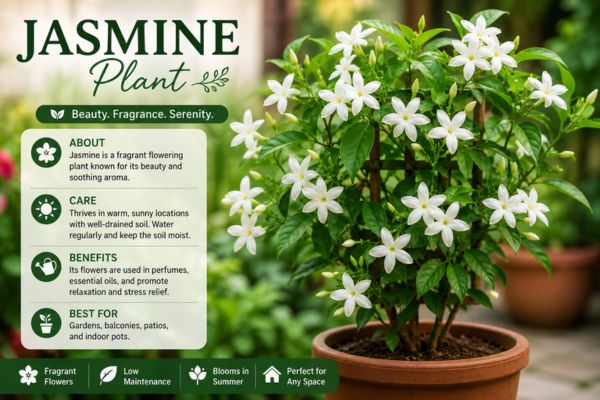
Few plants can fill a room, or an entire garden, with scent quite the way jasmine does. Walk past one in full bloom on a warm summer evening, and you’ll understand instantly why gardeners have been obsessed with it for centuries. Whether you’re tempted by a climbing vine scrambling up a trellis or a compact pot on a windowsill, the jasmine plant rewards a little patience with an awful lot of fragrance. This guide walks through everything you need to know to grow one successfully, both indoors and out.
What Exactly Is a Jasmine Plant?
Jasmine belongs to the genus Jasminum, part of the olive family, Oleaceae, and it includes more than two hundred species native to warm regions of Eurasia, Australasia, and Oceania. Despite that huge variety, most gardeners in the UK will encounter just a handful of types, each with its own personality. Some climb eagerly towards the sun, while others stay low and shrubby, quietly flowering through the coldest months of the year.
Common jasmine, known botanically as Jasminum officinale, is probably the variety most people picture when they think of the plant. Its white, star-shaped flowers carry that unmistakable sweet scent, and it’s forgiving enough for beginners to grow with confidence. Arabian jasmine, or Jasminum sambac, is smaller and often grown indoors, prized for the intensely fragrant blooms used in teas and perfumes across the world.
Winter Jasmine and Other Notable Varieties
Not every jasmine blooms in summer, which is part of what makes the plant family so useful for gardeners. Winter jasmine, Jasminum nudiflorum, produces cheerful yellow flowers from late autumn through early spring, well before its leaves even unfurl. Although these blooms are unscented, the plant more than makes up for it with vigorous growth, making it ideal for covering banks or cascading elegantly over a retaining wall.
Meanwhile, star jasmine, or Trachelospermum jasminoides, often confuses gardeners because it isn’t a true jasmine at all. Native to China, it belongs to a different plant family entirely, yet its highly scented, phlox-like flowers look and smell so similar that most people never notice the difference. It’s a reliable choice for warmer, sheltered gardens across much of the UK.
Getting the Growing Conditions Right
Jasmine plants are, above almost everything else, sun lovers. Most varieties need at least six hours of direct sunlight each day to flower properly, so a south-facing spot works brilliantly, whether that’s a garden bed or a windowsill indoors. Winter-flowering types are a little more forgiving and will tolerate partial shade, but even they perform best with generous light throughout the day.
Soil requirements are refreshingly straightforward, since jasmine isn’t especially fussy once it’s established. A moderately fertile, loamy, sandy soil that retains moisture without becoming waterlogged suits most varieties well. Because jasmine dislikes sitting in soggy conditions, good drainage matters just as much as consistent moisture, particularly for plants grown in containers where excess water has nowhere to escape.
Indoor Jasmine: Getting the Basics Right
Growing jasmine indoors introduces a few extra considerations, though nothing overly complicated. Keep the room temperature somewhere between 15 and 24 degrees Celsius, and try to avoid placing your plant near radiators, wood-burning stoves, or draughty windows, since dry air tends to stress jasmine quickly. A tray of pebbles topped with water beneath the pot can help maintain the humidity these plants secretly crave.
Because indoor air circulation matters so much, opening a window occasionally does wonders for your jasmine’s overall health. Watering should happen only once the top inch of soil feels dry to the touch, rather than on a fixed schedule, since overwatering remains one of the most common reasons indoor jasmine plants struggle. Consistency, in other words, beats guesswork every single time.
Watering, Feeding, and Everyday Care
As a general rule, jasmine likes its soil consistently moist without ever becoming soggy underfoot. During the height of summer, that might mean watering once or twice a week, though it’s always worth checking the soil rather than following a rigid timetable. Once established, garden jasmine becomes noticeably more drought-tolerant, although regular watering still encourages healthier growth and better flowering overall.
Feeding matters too, particularly during the growing season between spring and early autumn. A liquid fertiliser rich in potassium and phosphorus, applied every few weeks, supports strong flower production without pushing excessive leafy growth. However, feeding should stop entirely through autumn and winter, giving the plant a proper rest period before the next growing season begins.
Pruning for Better Blooms
Pruning is where many new jasmine owners feel unsure, yet it’s genuinely one of the easier tasks involved in caring for this plant. Summer-flowering varieties should be pruned after they’ve finished blooming, removing thin or old shoots to encourage a tidier shape and stronger growth next season. Winter jasmine follows the same general rule, just shifted later in the calendar to match its different flowering period.
If your jasmine has become overgrown or leggy, don’t panic, because most varieties respond remarkably well to hard pruning. Regrowth tends to be vigorous, though it’s worth noting the plant may take two or three years to flower fully again after a serious renovation. Choosing strong new shoots to train onto a support afterwards will help the plant recover its shape more quickly.
Common Problems and How to Solve Them
Yellowing leaves are, understandably, one of the most frequent concerns among jasmine growers, and the cause almost always comes down to watering or light. Overwatering, underwatering, and insufficient sunlight can all produce similar symptoms, so it’s worth assessing each factor individually rather than assuming the worst straight away. A simple soil check often reveals the answer within minutes.
Pests occasionally cause trouble too, with aphids, spider mites, and whiteflies being the usual culprits on both indoor and outdoor plants. Thankfully, these are generally manageable using insecticidal soap or neem oil, applied consistently until the infestation clears. Good air circulation also goes a long way toward preventing fungal issues like powdery mildew, especially indoors where airflow can otherwise be limited.
Why Every Garden Deserves a Jasmine Plant
Beyond the obvious visual appeal, jasmine brings something genuinely special to any space, whether that’s a sprawling garden or a modest flat with a single sunny windowsill. Its fragrance has long been associated with relaxation, and there’s something quietly wonderful about a plant that rewards fairly minimal effort with such an intense, memorable scent. Few houseplants offer that same emotional payoff.
Ultimately, growing a jasmine plant successfully comes down to getting a handful of basics right: plenty of light, careful watering, sensible feeding, and timely pruning. Get those elements sorted, and the plant will reward you with fragrant blooms year after year, indoors or out. Once you’ve experienced a jasmine in full flower, it’s genuinely hard to imagine a garden, or a home, without one.
