

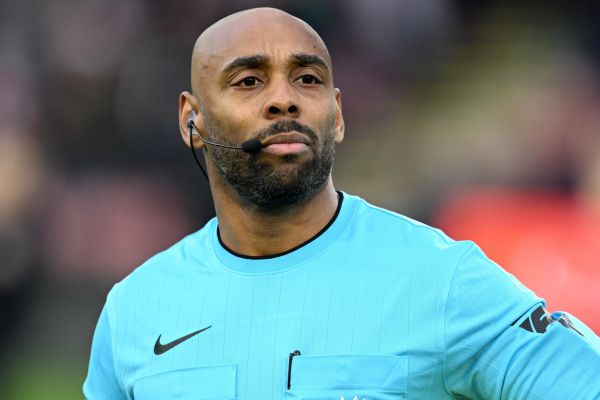
Some careers change direction once. Sam Allison’s changed twice, and both times he ended up somewhere remarkable. Born in Chippenham, Wiltshire, on 1 October 1980, Allison went from playing midfield in England’s lower leagues to fighting fires for a living, before eventually becoming one of the most talked-about referees in the Premier League. His story isn’t just about football; it’s about persistence, reinvention, and quietly breaking down a barrier that had stood untouched for fifteen years.
From Midfielder to Match Official
Before he ever picked up a whistle, Sam Allison was a footballer through and through. He played as a midfielder for a string of clubs, including Swindon Town, Bristol City, Bournemouth, and Exeter City, as well as spells at Clevedon Town, Bath City, Salisbury City, Chippenham Town, and Frome Town. He even represented England and Great Britain at schoolboy level, which says plenty about his natural talent for the game long before refereeing entered the picture.
Like many players, however, Allison eventually found himself drifting down the football pyramid into the semi-professional ranks. A secretary at one of his clubs, who happened to be a refereeing coach, suggested he consider officiating once his playing days wound down. Allison brushed off the idea at first, but roughly seven years later, he decided to give it a proper go, determined to stay involved in the sport he loved for as long as possible.
A Nervous Debut in Wiltshire
Allison’s first match as a referee took place on a chilly Sunday morning at Bratton, a small local ground in his home county. There was no support team around him, no assistant to lean on, and plenty of nerves to manage. He’s spoken candidly about giving a penalty that day based more on instinct than positioning, admitting it was closer to a guess than a textbook decision, yet it marked the beginning of everything that followed.
That shaky start didn’t discourage him, though; if anything, it sharpened his determination to keep improving. Allison began officiating local matches in 2011, working his way steadily through the lower leagues. His years as a player gave him a genuine feel for how games unfold, which allowed him to earn credibility with players and coaches far faster than someone without that background might have managed.
Balancing Two Demanding Careers
Refereeing rarely pays enough on its own at the lower levels, so Sam Allison needed something stable alongside it. In 2006, he joined the fire service part-time, eventually working his way up to become a station manager with the Dorset and Wiltshire Fire and Rescue Service. Juggling emergency call-outs with weekend fixtures wasn’t easy, but the discipline required in both roles complemented each other more than most people might expect.
Sam Allison has often reflected on how directly his firefighting career shaped his temperament on the pitch. Dealing with genuine life-and-death pressure, from water rescues to rope rescues, put the stress of a heated Sunday league match into perspective rather quickly. Consequently, when tempers flared during matches later in his career, Allison rarely seemed rattled, drawing on a calmness that clearly came from somewhere far more serious than football.
Climbing the English Football League Ladder
Following his promotion in 2020, Sam Allison became the fifth Black referee to officiate in the English Football League, following in the footsteps of Uriah Rennie, Trevor Parkes, Phil Prosser, and Joe Ross. From there, his progress accelerated steadily rather than dramatically, and he went on to take charge of more than one hundred matches across the EFL, building a reputation as a fair, composed official along the way.
His first genuine taste of Premier League action arrived in October 2022, when he served as fourth official for the fixture between Brighton & Hove Albion and Chelsea. That experience, brief as it was, gave him a clear look at what life inside the top flight actually involved. Shortly afterwards, Allison was promoted to officiate in the Championship for the 2023/24 season, setting the stage for what came next.
Making History on Boxing Day
On 26 December 2023, Sam Allison took charge of Sheffield United’s home fixture against Luton Town, and in doing so, became the first Black referee to officiate a Premier League match in fifteen years. The last person to hold that distinction was Uriah Rennie, who had stepped away from the competition back in 2008 after eleven years as a top-flight official. Notably, Allison’s milestone came just three days after Rebecca Welch made her own history as the first woman to referee a Premier League game.
Speaking around that time, Allison made clear he wasn’t chasing this moment purely for himself. He talked openly about wanting to be a role model within his community and about showing what representation could look like within English football. Reaching the very top of the game as a referee, after falling short of doing so as a player, clearly meant something deeply personal to him, and it showed in how he spoke about the milestone.
What Makes Allison Stand Out on the Pitch
Colleagues and commentators alike have described Allison’s approach as calm, authoritative, and refreshingly consistent. Having played competitive football himself, he tends to let matches flow naturally rather than interrupting play unnecessarily, while still stepping in firmly when situations demand it. That balance between letting the game breathe and maintaining control isn’t easy to strike, yet it’s become something of a hallmark for him.
Beyond the pitch, Allison has also supported wider efforts to tackle discrimination in football, including initiatives connected to the Premier League’s No Room for Racism campaign. Given his own journey, his involvement carries genuine weight rather than feeling like a box-ticking exercise. Younger referees, particularly those from underrepresented backgrounds, now regularly point to Allison as proof that a career at the highest level is genuinely achievable.
A Story Still Being Written
Sam Allison’s rise from Wiltshire’s local pitches to the Premier League didn’t happen overnight, nor did it happen by accident. It came from years of quiet persistence, a willingness to start again after his playing career ended, and the discipline forged through a genuinely demanding second job. Few referees can claim a backstory quite as compelling as fighting fires between weekend fixtures.
Looking ahead, Allison’s influence seems likely to extend well beyond his own appearances on the pitch. His journey has already opened doors for conversations about representation within officiating, and his continued presence in the Premier League only reinforces that impact. Whatever fixtures come next, Sam Allison has already secured his place in English football history, and that achievement isn’t going anywhere.
