

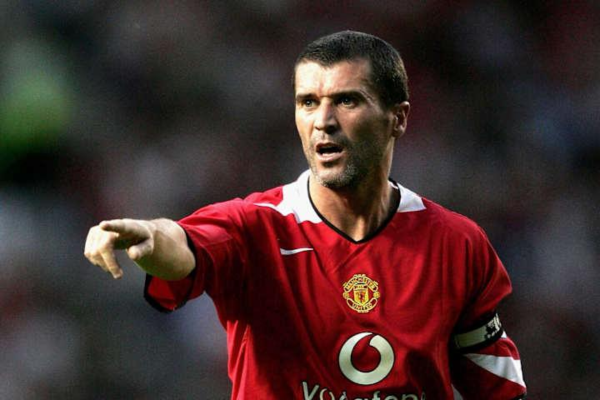
Few names in football stir up as much conversation as Roy Keane. Whether you loved his snarling intensity on the pitch or found his post-match rants a bit much, there’s no denying the man built a legacy that still gets discussed in pubs, on podcasts, and across social media decades later. Roy Keane wasn’t just a footballer; he was a statement. Every tackle, every interview, and every raised eyebrow told a story about a man who simply refused to accept mediocrity, either from himself or from anyone standing near him.
From Cork’s Streets to Football’s Biggest Stage
Born on 10 August 1971 in the Mayfield area of Cork, Roy Keane didn’t have the easiest route into professional football. Scouts initially dismissed him for being too small, which, looking back, feels almost comical given how much ground he covered during his career. He started out at Cobh Ramblers, a modest League of Ireland club, before Brian Clough spotted something special and brought him to Nottingham Forest in 1990.
That move changed everything. Under Clough’s guidance, Keane developed the relentless work ethic and tactical sharpness that would eventually define his time at Manchester United. Although Forest never won major silverware during his stint there, the experience toughened him up. By the time Manchester United came calling in 1993 with a then-British record fee of £3.75 million, Keane was ready to become the leader everyone at Old Trafford needed.
The Manchester United Years That Defined a Career
Roy Keane’s Manchester United career reads like a highlight reel of grit and glory. He captained the side through one of the most successful periods in the club’s history, lifting seven Premier League titles, four FA Cups, and the Champions League in 1999. His performance against Juventus in that year’s semi-final, where he scored while carrying a booking that would rule him out of the final, remains one of the most selfless displays in modern football history.
What made Keane different, though, wasn’t just his medal collection. It was his standards. Teammates knew that turning up late, giving the ball away carelessly, or slacking off in training would earn them a verbal lashing they wouldn’t forget. Sir Alex Ferguson once called him the best player he’d ever worked with, and considering the calibre of talent Ferguson managed over the years, that’s no small compliment.
However, Keane’s time at United wasn’t without controversy. His tackle on Alf-Inge Håland, which he later admitted in his autobiography was an act of revenge, still sparks debate among fans and pundits. Similarly, the so-called “Prawn Sandwich Affair,” where he criticised the corporate atmosphere at Old Trafford during a Champions League tie, showed a man who valued passion over politeness. These moments, love them or hate them, cemented his reputation as football’s most honest voice.
Saipan: The Incident That Shook Irish Football
Perhaps no story captures Roy Keane’s uncompromising nature better than the Saipan incident during the build-up to the 2002 World Cup. Frustrated by poor training facilities and what he saw as a lack of professionalism, Keane spoke openly to journalists about his concerns. When Ireland manager Mick McCarthy confronted him in front of the entire squad, Keane didn’t back down; instead, he left the tournament altogether.
The fallout was massive, dividing Irish football fans for years afterwards. Some saw Keane as a hero standing up for standards; others viewed him as selfish for abandoning his country on the eve of a major tournament. Regardless of where you stand, the episode revealed something important about Keane’s character. He genuinely couldn’t tolerate what he considered a lack of commitment, even if it meant sacrificing his own World Cup dream.
Life After Playing: Management and Mixed Results
Once his playing days ended in 2006 following a short spell at Celtic, Roy Keane moved into management, starting with Sunderland. His impact was immediate and dramatic; he took the club from 23rd place in the Championship to winning the division outright and securing promotion. That early success suggested Keane might become as formidable a manager as he had been a player.
Unfortunately, the momentum didn’t last. His time at Ipswich Town between 2009 and 2011 proved far less successful, and brief assistant manager roles at Aston Villa and Nottingham Forest didn’t reignite the magic either. Still, his most enduring managerial contribution came as assistant to Martin O’Neill with the Republic of Ireland national team, a position he held from 2013 to 2018. Even in a supporting role, Keane’s presence commanded attention.
Becoming Television’s Most Fearless Pundit
If Keane’s playing career made him famous, his punditry work has arguably made him a household name for an entirely new generation. Since joining ITV and Sky Sports as an analyst, he’s built a reputation for saying exactly what he thinks, regardless of whether it ruffles feathers. Fans tune in not just to hear tactical breakdowns but to see whether he’ll deliver one of his trademark deadpan put-downs.
This unfiltered approach has made him one of the most quoted figures in British football media. Whereas many pundits soften their opinions to avoid controversy, Keane consistently calls out underperforming players, questionable managerial decisions, and complacency wherever he sees it. That honesty, though sometimes uncomfortable, is precisely why audiences keep coming back for more.
Why Roy Keane’s Legacy Still Resonates Today
Even now, years after hanging up his boots, Roy Keane remains one of football’s most discussed figures. His name pops up whenever conversations turn to leadership, discipline, or what it truly takes to succeed at the highest level. Younger fans who never saw him play still recognise him from his blunt television appearances, proving that his influence stretches well beyond his playing statistics.
Part of what keeps Keane relevant is his refusal to soften with age. Many former players mellow once they retire, offering safe, diplomatic opinions to protect relationships within the game. Keane has taken the opposite path, becoming, if anything, even more direct. This consistency has turned him into something of a cultural touchstone, someone whose reactions to major football moments are almost as anticipated as the events themselves.
His induction into the Premier League Hall of Fame in 2021 only reinforced what fans already believed. Roy Keane wasn’t just a good player; he was a genuinely transformative figure who changed how people thought about leadership on the pitch. His combative style, paired with an unshakeable belief in high standards, created a template that many captains since have tried, and often failed, to replicate.
Final Thoughts
Roy Keane’s story isn’t a simple tale of triumph and trophies. It’s a study in intensity, honesty, and an almost obsessive pursuit of excellence that occasionally spilt over into controversy. From humble beginnings in Cork to captaining one of football’s greatest teams, and now commanding attention as a pundit, Keane has never once pretended to be something he isn’t. Love him or find him exhausting, there’s no arguing that football would be a far duller place without him.
