
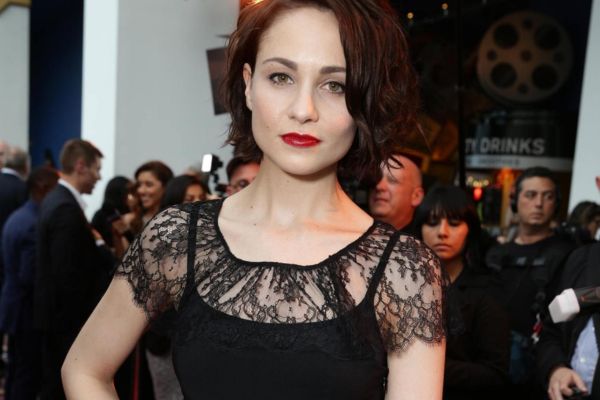
There’s something refreshing about an actress who has built a genuinely impressive career without ever seeming desperate for attention. Tuppence Middleton fits that description perfectly. She’s not a household name in the way some of her contemporaries are, yet ask any keen follower of British drama or Netflix’s global hits, and they’ll immediately recognise her work. From period dramas to science-fiction epics, Tuppence Middleton has quietly become one of the most versatile performers to emerge from the UK in the past decade and a half.
Who Is Tuppence Middleton?
Born on 21 February 1987 in Bristol, Tuppence Middleton grew up in Clevedon, Somerset, a small coastal town that seems an unlikely launchpad for an international acting career. However, her early years hinted at what was to come. She attended Bristol Grammar School, where she threw herself into school productions, and later trained at Stagecoach, a performing arts school in nearby Portishead. Her unusual first name, incidentally, comes from a childhood nickname her grandmother gave to her own mother.
By her own admission, young Tuppence was shy and somewhat reclusive at school, yet she became far more animated and confident at home. Youth theatre, she has said, gave her a genuine outlet to express herself. That contrast between reserved and expressive sides of her personality would later become one of her greatest strengths as a performer, allowing her to slip convincingly into wildly different roles.
Early Training and First Steps
After finishing school, Middleton went on to study acting at the Arts Educational School in London, earning an honours degree in the craft. This formal training gave her the grounding she needed before stepping onto professional sets. Her first television appearance came in an episode of “Bones” back in 2008, followed by guest roles in British staples like “New Tricks,” “Friday Night Dinner,” and “Lewis.” These early credits weren’t flashy, but they built the foundation for everything that followed.
The Breakthrough Years
Every actor needs that one role which shifts perception, and for Tuppence Middleton, that moment arrived with “The Imitation Game” in 2014. Directed by Morten Tyldum, the historical drama about codebreaker Alan Turing became a global awards contender, and her involvement placed her firmly on the industry’s radar. Suddenly, casting directors who might not have noticed her earlier work were paying close attention.
That momentum carried straight into 2015, a genuinely pivotal year for her career. She appeared in the Wachowskis’ ambitious science-fiction blockbuster “Jupiter Ascending,” and around the same time, she landed the role that many fans still associate with her most closely: Riley “Blue” Gunnarsdóttir in Netflix’s “Sense8.” The show ran until 2018 and developed a fiercely loyal fanbase, thanks largely to its bold storytelling and diverse ensemble cast. Middleton’s performance as Riley, a DJ entangled in a global psychic conspiracy, showcased a gentler, more emotionally exposed side of her range.
Period Dramas and Prestige Television
While science fiction introduced her to international audiences, period drama arguably remains where Tuppence Middleton feels most at home. In 2015 and 2016, she played Miss Havisham in the BBC’s “Dickensian,” a clever series that wove together characters from across Charles Dickens’s novels. Almost simultaneously, she took on the role of Princess Hélène Kuragina in the BBC’s lavish adaptation of “War & Peace.” Critics were quick to praise her portrayal of the manipulative aristocrat, and the performance is often cited as one of the standout turns in that acclaimed series.
Her period drama credentials only strengthened from there. She joined the “Downton Abbey” film franchise, appearing in both the 2019 original and its 2022 sequel, “Downton Abbey: A New Era.” Around the same time, she featured in Alfonso Gómez-Rejón’s “The Current War” and David Fincher’s Oscar-nominated “Mank” in 2020, working alongside some genuinely heavyweight names in the industry.
Stage Work and Creative Growth
Although screen work has defined much of her public profile, theatre has clearly become an increasingly important part of Tuppence Middleton’s artistic life. In 2023, she took on the role of Elizabeth Taylor in “The Motive and the Cue,” a Sam Mendes-directed play at the National Theatre, performing opposite Johnny Flynn and Mark Gatiss. The production later transferred to the West End, a clear sign of its critical and commercial success. More recently, in 2025, she played French author Annie Ernaux in a stage adaptation of Ernaux’s autobiographical novel “The Years,” which also enjoyed a West End run.
Stepping Behind the Camera
Interestingly, Middleton hasn’t confined herself purely to acting. She co-wrote and starred in the short film “Four,” working alongside fellow actors including Jack Farthing and Iwan Rheon. Beyond that, she’s now developing a feature film adaptation of the Finnish novel “Troll: A Love Story,” a project she intends to direct herself. This shift towards writing and directing suggests an artist keen to shape stories on her own terms, rather than simply waiting for the right script to land in her inbox.
Life Beyond Acting
What makes Tuppence Middleton particularly relatable to many fans is her openness about personal struggles. She has spoken candidly about living with obsessive-compulsive disorder, a condition she developed at the age of twelve. In 2021, she used that experience productively, conducting a series of interviews for BBC Radio 4 in which she spoke with a clinical psychologist and others managing similar challenges. She’s also mentioned dealing with emetophobia, an intense fear of vomiting, which she says heightens her preoccupation with cleanliness.
Given the shared surname, it’s perhaps unsurprising that rumours occasionally circulate suggesting she’s related to Catherine, Princess of Wales. Middleton has firmly denied any family connection, treating the coincidence with good humour rather than frustration. It’s a small but telling example of how she navigates public curiosity: honestly, and without unnecessary drama.
A Voice Beyond the Screen
Her talents extend into narration work too. She has lent her voice to BBC World Service documentaries, including one on the Spitfire aircraft and another on the life of Prince Philip, Duke of Edinburgh. She also narrated an immersive audio tour based around London’s Great Exhibition, demonstrating just how comfortable she is working across different creative formats, not merely traditional film and television roles.
Why Tuppence Middleton’s Career Stands Out
What ultimately sets Tuppence Middleton apart is consistency paired with genuine range. Few actors move as fluidly between blockbuster science fiction, prestige period drama, and serious stage work while maintaining such a strong reputation across all three. She hasn’t relied on a single defining role to sustain her career; instead, she’s built a body of work that rewards closer attention the more you explore it.
As she continues developing projects behind the camera alongside her acting commitments, it seems likely that Tuppence Middleton’s most interesting chapter is still being written. For audiences who appreciate substance over spectacle, she remains one of British acting’s most quietly compelling talents, and one well worth keeping an eye on in the years ahead.
