
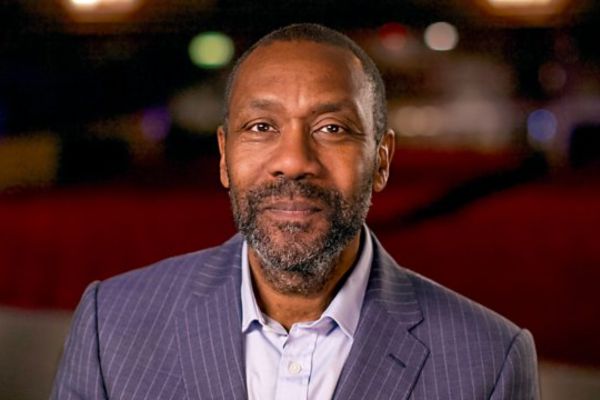
Few British entertainers have managed to reinvent themselves quite as convincingly as Lenny Henry. He started out as a teenage impressionist doing knockabout impressions on a Saturday morning talent show, yet decades later, he’s a knighted actor performing Shakespeare on the West End stage. That journey alone makes him one of the most fascinating figures in British entertainment history, and it’s worth understanding exactly how he got there.
Who Is Lenny Henry?
Born Lenworth George Henry on 29 August 1958 in Dudley, West Midlands, he grew up in a household shaped by his parents’ Jamaican heritage. That cultural background would later become central to his comedy, informing characters and material that both celebrated and gently poked fun at African-Caribbean life in Britain. It’s a thread that runs through nearly everything he’s created since.
Lenny Henry entry into show business came almost by accident. At just sixteen, he entered the television talent show “New Faces” in 1975 and won, thanks largely to his impersonations of Frank Spencer, Stevie Wonder, and various other well-known figures. That single appearance opened doors that most teenagers could only dream about, and Henry wasted no time walking through them.
Early Career and Breakthrough Roles
Following his “New Faces” win, Henry quickly landed a role in “The Fosters” in 1976, which holds the distinction of being Britain’s first sitcom to feature a predominantly Black cast. Around the same period, he became a familiar face on the children’s entertainment show “Tiswas,” building a loyal young audience who would later grow up alongside his career. These early roles gave him invaluable screen experience while he was still finding his comedic voice.
By 1981, Henry had teamed up with Tracey Ullman and David Copperfield for the variety show “Three of a Kind,” further cementing his reputation as a performer capable of holding his own alongside established talent. However, it was his own show, launched in 1984, that truly defined this phase of his career and turned him into a household name across the country.
The Lenny Henry Show and Rising Fame
“The Lenny Henry Show” ran periodically for around two decades, shifting between sketch comedy and sitcom formats depending on the era. Throughout its various incarnations, Henry introduced characters that became genuinely iconic, including Delbert Wilkins, a Brixton pirate radio DJ, and Theophilus P. Wildebeeste, a send-up of soul singers like Teddy Pendergrass. Audiences loved the show’s blend of sharp observation and warmth.
During this period, Henry also met actress and comedian Dawn French through The Comic Strip, an alternative comedy collective that pushed British humour in bolder, edgier directions. The pair married in 1984, and French encouraged him to embrace alternative comedy more fully, a shift that arguably sharpened his material and broadened his creative ambitions considerably.
A Brief Brush with Hollywood
In 1989, Henry became the first British comic to release a live stand-up concert film, “Lenny Live and Unleashed,” which performed well domestically and caught the attention of Walt Disney Company executives. As a result, he was offered the lead role in “True Identity” (1991), along with a contract for two further Disney films worth roughly a million dollars.
Unfortunately, “True Identity” flopped at the box office, bringing in less than five million dollars against its budget. Consequently, Disney cancelled the remaining contract, and Henry returned to Britain to rebuild his career on more familiar territory. Rather than seeing this as a defeat, though, he used the experience to refocus on the character comedy that audiences already adored him for.
Comic Relief and a Legacy of Giving
Perhaps Henry’s most enduring contribution to British culture isn’t a television show or film role at all. In 1985, he co-founded Comic Relief alongside screenwriter Richard Curtis, and three years later, the very first Red Nose Day raised more than £15 million through a single evening broadcast watched by around 30 million people. That charity has since become a fixture of British television.
Henry has appeared in nearly every Red Nose Day broadcast since 1988, and his commitment to the cause has never wavered. This dedication to charity work, combined with his creative output, eventually earned him a knighthood in 2015 for services to charity and drama, recognising a career built on more than just laughs.
Transition to Serious Drama
From the 1990s onward, Henry began steering his career toward more dramatic territory, starting with the sitcom “Chef!,” which ran from 1993 to 1996 and showcased a sharper, more character-driven style of comedy. This period marked the beginning of a gradual shift that would eventually see him tackle far weightier material altogether.
That shift accelerated in the 2010s. Henry took on roles in “Harry Potter and the Prisoner of Azkaban” (2004), the acclaimed crime drama “Broadchurch” (2017), and “Doctor Who” (2020), proving he could hold his own in dramatic ensembles alongside some of Britain’s most respected actors. Each role chipped away at the assumption that he was simply a comedian dabbling in drama.
Stage Work and Critical Acclaim
Henry’s theatrical ambitions reached a genuine milestone in 2009, when he made his West End debut as Othello in a Northern Broadsides production. Critics responded with considerable warmth, and he received the London Evening Standard’s Milton Shulman Award for Outstanding Newcomer, a remarkable achievement for someone stepping into Shakespearean tragedy relatively late in his career.
This stage success signalled something important: Henry wasn’t simply trading on nostalgia or past sitcom fame. He was genuinely expanding his craft, taking risks that plenty of established comedians might have avoided altogether. That willingness to stretch himself has continued to define his choices ever since, both on stage and screen.
Writing, Advocacy, and Academic Life
Beyond performing, Henry holds a PhD in Media Arts, reflecting a genuinely scholarly interest in the industry he’s spent his life working within. He’s also written extensively about diversity in British television, using his platform to push for meaningful change rather than simply calling out problems from the sidelines. His nonfiction work, published through Faber, tackles these themes head-on.
His writing includes reflections on race, representation, and reparations, subjects he approaches with the same directness that’s characterised his comedy for decades. This willingness to engage with difficult conversations, rather than avoid them, has earned him respect well beyond the entertainment industry itself.
Why Lenny Henry Still Matters
What makes Lenny Henry such a compelling figure isn’t just longevity, though forty-plus years in the public eye is impressive by any measure. It’s the constant evolution: from teenage impressionist to sitcom star, from charity founder to serious dramatic actor, and now to author and advocate. Few entertainers manage that many convincing reinventions within a single career.
As British entertainment continues shifting toward greater diversity both on screen and behind the camera, Henry’s decades of groundwork feel more relevant than ever. He didn’t just adapt to changing times; in many respects, he helped create the conditions for that change. That’s a legacy worth far more than any individual award or accolade could capture.
