
Most job seekers spend hours polishing their qualifications and listing every certificate they’ve ever earned. Yet, when it comes down to it, employers are often looking for something far less tangible. That something is employability skills — the personal qualities and transferable abilities that determine whether you’ll thrive once you’re actually in the role, not just whether you look good on paper.
What Are Employability Skills, Really?
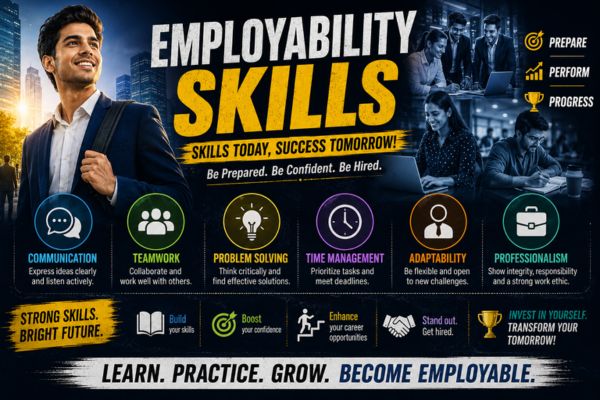
Employability skills are the soft, transferable abilities that make you genuinely useful in any workplace, regardless of industry or job title. Unlike technical knowledge, which tends to be specific to a role, these skills travel with you. Communication, teamwork, problem-solving, and adaptability are all classic examples, and they matter just as much in a warehouse as they do in a boardroom.
What makes these skills so valuable is that they’re notoriously hard to teach. A company can train someone to use new software within a week, but it’s much harder to instil patience, initiative, or the ability to read a room. That’s precisely why hiring managers increasingly prioritise candidates who already demonstrate these traits over those who simply tick technical boxes.
It’s worth noting that employability skills aren’t a fixed list everyone agrees on. Different organisations and frameworks group them slightly differently, but the core themes are remarkably consistent: people who communicate well, work effectively with others, and adapt to change tend to outperform those who don’t, no matter their job description.
Why Employers Care So Much About Soft Skills
Recruiters aren’t being difficult when they ask behavioural interview questions about teamwork or conflict resolution. They’re trying to predict how you’ll behave under real pressure, because technical brilliance means little if someone can’t collaborate or handle setbacks gracefully. A skilled but disruptive employee can do more damage to morale than a moderately skilled, dependable one.
There’s also a financial angle that’s easy to overlook. Hiring is expensive, and a poor cultural fit often leads to turnover, retraining costs, and lost productivity. Consequently, businesses have become savvier about screening for employability skills early in the process, often before they even assess technical competence in detail.
Furthermore, the modern workplace changes faster than ever. Technologies evolve, teams restructure, and job descriptions shift within months of being written. Employers therefore want people who can adapt quickly, learn on the fly, and stay calm amid uncertainty, since these qualities outlast any single piece of software training.
The Core Skills Employers Look For
Communication and Interpersonal Ability
Clear communication sits at the heart of almost every employability skill. Whether you’re writing an email, presenting an idea, or simply listening to a colleague’s concern, your ability to express yourself accurately and respectfully shapes how others perceive your competence. Strong communicators also tend to build better relationships, which smooths collaboration across departments.
Interpersonal skills go hand in hand with communication, covering things like empathy, negotiation, and reading non-verbal cues. These traits help you navigate office politics, manage disagreements, and build trust with clients or customers. Without them, even brilliant ideas can get lost in translation or, worse, cause friction within a team.
Problem-Solving and Critical Thinking
Every workplace throws up unexpected challenges, and employers want staff who can think on their feet rather than freeze or escalate every minor issue. Problem-solving involves spotting the root cause of a difficulty, weighing up options, and choosing a practical solution without unnecessary hand-holding from management.
Critical thinking complements this nicely, since it’s about questioning assumptions and evaluating information objectively before acting. Together, these skills allow employees to handle ambiguity confidently. That’s particularly valuable in fast-moving industries, where waiting for perfect information simply isn’t an option.
Adaptability and Willingness to Learn
Few traits are as prized right now as adaptability. Businesses pivot strategies, adopt new tools, and restructure teams more frequently than they used to, so employees who resist change quickly become a liability. Those who embrace new ways of working, however, often find themselves trusted with greater responsibility over time.
Closely related is a genuine willingness to learn. Nobody expects you to know everything from day one, but employers do expect curiosity and a proactive attitude toward picking up new skills. This mindset signals long-term potential, which matters enormously when companies are deciding who to invest in for future growth.
Time Management and Organisation
Meeting deadlines without sacrificing quality is harder than it sounds, especially when juggling multiple priorities. Good time management means knowing how to prioritise tasks, anticipate bottlenecks, and communicate early if something’s at risk of slipping. This reliability builds trust, which is the foundation of any strong working relationship.
Organisational skills extend beyond personal task lists too. They involve structuring information clearly, keeping projects on track, and ensuring nothing important falls through the cracks. Employees who master this rarely create chaos for their colleagues, and that alone makes them easier to work alongside.
Teamwork and Collaboration
Very few jobs today exist in isolation, which means the ability to collaborate effectively is non-negotiable. Good team players contribute their share without needing constant supervision, while also supporting colleagues when workloads become uneven. This balance between independence and cooperation is exactly what most managers are hoping to see.
Collaboration also requires a degree of humility. Being open to feedback, sharing credit, and compromising when necessary all strengthen team dynamics. Employees who genuinely enjoy working with others, rather than merely tolerating it, tend to create a more positive atmosphere that benefits everyone around them.
How to Build and Demonstrate These Skills
Building employability skills doesn’t require a formal course, although structured learning can certainly help. Volunteering, part-time work, group projects, and even hobbies that involve other people all offer genuine opportunities to practise communication, leadership, and adaptability in real situations. The key is reflecting on what you actually learned from each experience.
When it comes to demonstrating these skills to potential employers, specificity matters far more than vague claims. Rather than simply stating you’re “a good communicator,” describe a situation where you resolved a misunderstanding or persuaded a sceptical client. Concrete examples carry far more weight during interviews and on application forms than generic descriptors ever will.
It also helps to treat skill development as an ongoing process rather than a box to tick once. Seeking feedback regularly, reflecting on mistakes honestly, and deliberately stepping outside your comfort zone all contribute to steady improvement. Over time, these small efforts compound into a noticeably stronger professional reputation.
Final Thoughts
Employability skills might not appear explicitly in most job adverts, but they quietly shape almost every hiring decision made today. Technical knowledge gets your foot in the door, yet it’s communication, adaptability, problem-solving, and teamwork that determine whether you’ll actually flourish once you’re inside. Investing time in these areas isn’t just good career advice; it’s one of the smartest long-term decisions you can make for your professional future.
