
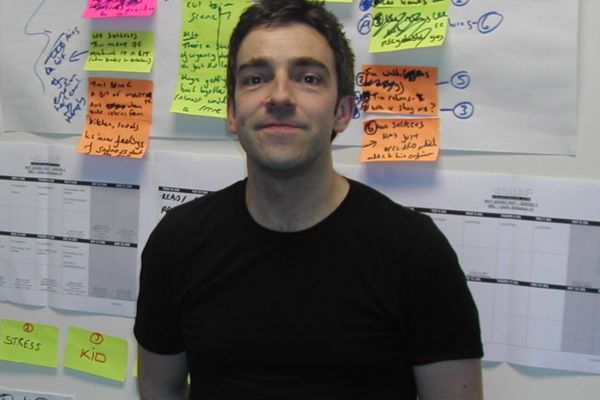
Andrew Collins is one of those rare figures in British media who has genuinely done it all and done it well. From scribbling music reviews for the NME in his younger years to co-writing one of the BBC’s most beloved sitcoms, his career reads like a masterclass in creative reinvention. He is a broadcaster, journalist, scriptwriter, and critic who has carved out a singular identity across radio, television, and print, all without losing the warmth and wit that make him so consistently watchable and listenable.
From Northampton to the NME: Where It All Began
Andrew Collins grew up in Northampton and studied graphic design and illustration at Chelsea School of Art a background that, perhaps surprisingly, fed directly into his instincts as a communicator. He has always understood how to shape and present ideas with clarity and impact. After graduating, he turned his attention to music journalism, and it quickly became apparent that he had a natural voice for it.
He joined the NME at a time when music weeklies were still cultural institutions, shaping the tastes and opinions of a generation. From there, he moved to Q magazine, where he eventually rose to the position of editor between 1995 and 1997. He also edited Empire, one of Britain’s most respected film publications, and contributed regularly to titles such as The Times, Word, and Radio Times. This was not someone coasting through a career Andrew Collins was actively building an expertise and a reputation, piece by piece, word by word.
A Broadcaster Who Actually Has Something to Say
What distinguishes Andrew Collins as a broadcaster is that he brings genuine knowledge to everything he discusses. He is not a presenter who reads from a card; he is someone who has lived inside these subjects music, film, television for decades. That depth shows, and audiences sense it immediately.
He hosted Back Row, the weekly film programme on BBC Radio 4, which gave him a platform to do what he does best: talk about cinema with intelligence and enthusiasm. He also presented a number of shows on BBC 6 Music from its launch in 2003 through to 2007, cementing his reputation as a reliable and engaging voice in music broadcasting. On Radio 2, he fronted The Day The Music Died, a topical comedy series that ran for six well-received series. On Radio 4, he hosted the panel game Banter, demonstrating once again his comfort across different formats and tones.
Collins & Maconie: A Partnership Built on Chemistry
One of the most enjoyable chapters in Andrew Collins’s broadcasting career was his collaboration with Stuart Maconie. The two formed a genuine double act that worked beautifully on radio, their shared sensibility and mutual affection for pop culture creating something genuinely entertaining. Together, they co-presented Collins & Maconie’s Movie Club on ITV a film review programme that trusted its hosts to have actual opinions rather than simply cheerleading whatever was in cinemas that week. It was the kind of television that felt effortless precisely because both men were so at home in the format.
Making the Move into Scriptwriting
Perhaps the most significant creative shift in Andrew Collins’s career was his move into television drama and comedy writing. It was not an obvious transition, but it turned out to be a deeply rewarding one both for him and for audiences.
He began as one of the first scriptwriters on Family Affairs, the soap opera that launched on Channel Five in the late 1990s. He worked on it for three years, developing a feel for long-form narrative and character-driven storytelling. From there, he moved to EastEnders, where he spent another three years as a regular writer no small thing, given the pressure and pace that Walford demands of its writing team. Working on a soap of that scale requires discipline, collaboration, and an ability to serve the story rather than the ego. Andrew Collins clearly had all three.
Not Going Out: A Career-Defining Collaboration
The project that brought Andrew Collins to the widest possible television audience was Not Going Out, the BBC One sitcom he co-created and initially co-wrote with its star, Lee Mack. The show became one of the most durable sitcoms in recent British television history a genuine crowd-pleaser built around sharp writing, brilliant physical comedy, and characters audiences actually cared about.
The industry recognised the achievement. Not Going Out won the Breakthrough Award at the Royal Television Society Awards, as well as the prestigious Rose d’Or for Best Sitcom. These are not minor accolades; the Rose d’Or has, since the 1960s, been one of the most coveted prizes in European broadcasting. For Andrew Collins, who had arrived in television through the side door of soap opera, this was a remarkable vindication of his instincts as a comedy writer.
He also co-wrote Grass with Simon Day, and later created Mr Blue Sky for BBC Radio 4 a sitcom that further demonstrated his versatility and his commitment to the craft of comedy writing at every level.
What Makes Andrew Collins Stand Out
In an era of media personalities who seem to exist primarily as brands, Andrew Collins is refreshingly different. He has never appeared particularly interested in celebrity for its own sake. Instead, he has focused consistently on the work on writing better scripts, presenting more thoughtful radio, and contributing genuinely to whatever project has his name attached to it.
His ability to move fluidly between criticism and creation is also unusual. Many critics struggle to make things; many writers are uncomfortable being analytical. Collins operates comfortably in both modes. He can dissect a film on Radio 4 one week and then sit down to write a comedy script the next, and both feel equally natural to him. That range is a genuine talent, and it has kept his career interesting across three decades.
A Digital Presence That Feels Genuinely Personal
Beyond broadcast and print, Andrew Collins has maintained a blog Where Did It All Go Right? that reflects his broader sensibility as a writer. The title alone tells you something about his outlook: reflective, a little self-deprecating, fundamentally curious about life and culture. It is the kind of online presence that feels like an extension of the person rather than a calculated content strategy, which in itself is something of a rarity.
A Career Still Very Much in Motion
Andrew Collins is not a figure from broadcasting history. He is an active, working creative professional whose best work may well still be ahead of him. His trajectory has never followed a predictable path from music journalism to soap opera, from film criticism to award-winning sitcom, from Radio 4 panel games to BBC 6 Music. Each move has felt organic rather than strategic, driven by genuine interest rather than career management.
That authenticity, ultimately, is what makes Andrew Collins worth paying attention to. In a crowded media landscape where noise often passes for substance, he has consistently offered the real thing: talent, knowledge, and a voice that is entirely his own.
