
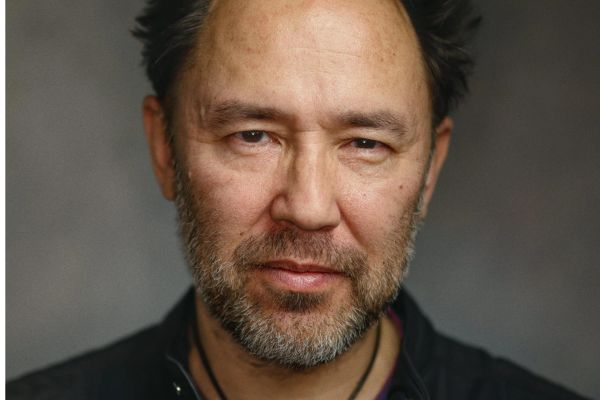
When people search for Daniel York Loh, they’re usually looking for more than a filmography or a list of credits. They want to understand the person behind the work—an artist who has spent decades pushing back against tired stereotypes and carving out space for British East Asian voices in an industry that hasn’t always made room for them. His story is one of persistence, reinvention, and a refusal to be boxed into a single label.
Born on 31 July 1966 in Bath, Somerset, Daniel York Loh grew up with mixed Singaporean and British heritage, a background that would later shape much of his creative output. From an early age, he gravitated toward performance, and that instinct eventually blossomed into a career spanning acting, writing, directing, and music. Few artists manage to juggle so many disciplines with equal conviction, yet Daniel York Loh has done exactly that, moving fluidly between film sets, theatre stages, and recording booths.
A Career Built on Screen and Stage
Daniel York Loh’s acting career took off with notable film roles that introduced him to wider audiences. He appeared in The Beach (2000), Rogue Trader (1999), and Doom (2005), three very different productions that showcased his range. However, his screen work only tells part of the story. Theatre has always been where he feels most at home, and his stage credits include performances at the Royal Court, the Royal Shakespeare Company, the National Theatre, and the Donmar Warehouse—some of the most respected venues in British theatre.
What makes his acting journey particularly compelling is the way he’s used it as a springboard for advocacy. Rather than simply accepting roles as they came, he became vocal about representation, pushing for more authentic portrayals of East Asian characters. This advocacy eventually led him to serve on the Equity Minority Ethnic Members Committee, where he continues to influence policy around diversity in the performing arts.
From Performer to Playwright
While many actors stay firmly on one side of the curtain, Daniel York Loh made the leap into writing, and it’s arguably where his most distinctive work lives. His first full-length play, The Fu Manchu Complex, premiered at Ovalhouse in 2013 and tackled the complicated legacy of Orientalist stereotypes head-on. It was a bold debut, and it set the tone for everything that followed.
His second major play, Forgotten 遗忘, played at both Arcola Theatre and Plymouth Theatre Royal in 2018, earning praise for its emotional depth and cultural specificity. Then came his most recent work, The Dao of Unrepresentative British Chinese Experience (Butterfly Dreams), which ran at Soho Theatre in June 2024 to rave reviews. Each play builds on the last, refining his voice as a writer unafraid to confront uncomfortable truths about identity and belonging.
Beyond these full productions, Daniel York Loh has also written and performed shorter pieces, including Invisible Harmony 无形的和谐 at the South Bank Centre, Living Newspaper Edition 1 at the Royal Court, and Silent Disco In The Sky at Northern Stage. Additionally, he collaborated with composer Craig Adams on Sinking Water, a stage musical inspired by the 2004 Morecambe Bay cockle-picker tragedy, which won the Perfect Pitch award in 2016 and remains in development with Theatre Royal Stratford East.
Filmmaking and Short Films
Daniel York Loh’s creative ambitions haven’t stopped at the stage. He’s also written and directed award-winning short films, several of which were made for prestigious UK drama schools such as RADA and LAMDA. His short film Laid picked up Best Sci-Fi at Cannes Shorts and Best Horror at the Paris Short Film Festival, while GYM won Best Women Empowerment Short Film at the Golden Lion Awards. These accolades highlight his versatility as a director, someone equally comfortable with genre filmmaking as he is with intimate character studies.
His other short film credits include Mercutio’s Dreaming: The Killing of a Chinese Actor, Dream of Emerald Hill, and Hall of Mirrors. Each project reflects his ongoing interest in exploring identity, cultural memory, and the immigrant experience through a distinctly British East Asian lens. Consequently, his filmography reads less like a checklist of jobs and more like a sustained artistic conversation.
A Voice in Literature
In 2016, Daniel York Loh became one of 21 “writers of colour” featured in The Good Immigrant, a landmark essay collection that went on to win the Books Are My Bag Reader’s Choice Award. The book sparked national conversations about race and belonging in Britain, and his contribution added a nuanced perspective on being East Asian in a country that often overlooks that community’s experiences. A tenth-anniversary edition later reaffirmed the collection’s lasting cultural impact.
Furthermore, Daniel York Loh has lent his voice to audiobook narration, reading works such as The Cultural Revolution and Red Dawn Over China, both by acclaimed historian Frank Dikötter. This work demonstrates yet another facet of his talent, proving that his storytelling instincts translate just as powerfully through audio as they do on stage or screen.
Advocacy and Community Building
It would be a mistake to discuss Daniel York Loh purely in terms of his creative output, because his advocacy work runs just as deep. He’s a founding member of British East Asian Artists, an organisation dedicated to improving opportunities and visibility for performers from that background. Alongside this, he’s collaborated with Act For Change, a campaign focused on promoting genuine diversity across UK media and entertainment.
This dual identity—artist and advocate—runs through nearly everything he does. Whether he’s writing a play about cultural erasure or sitting on a committee discussing industry reform, the underlying goal remains consistent: creating a media landscape where East Asian stories aren’t treated as niche or exotic, but as fully human and worthy of mainstream attention.
Why Daniel York Loh Matters Today
In an industry still grappling with questions of representation, Daniel York Loh stands out as someone who didn’t wait for permission to tell his stories. Instead, he built platforms himself, wrote the plays he wanted to see, and mentored the next generation through his work with drama schools. That kind of initiative is rare, and it’s part of why his name keeps surfacing in conversations about British theatre’s most important contemporary voices.
Looking ahead, his continued output suggests there’s no slowing down. With Sinking Water still in development and his reputation as a playwright growing with each production, Daniel York Loh seems poised to remain a defining figure in British East Asian arts for years to come. For anyone interested in theatre that challenges as much as it entertains, his body of work offers a compelling place to start.
