
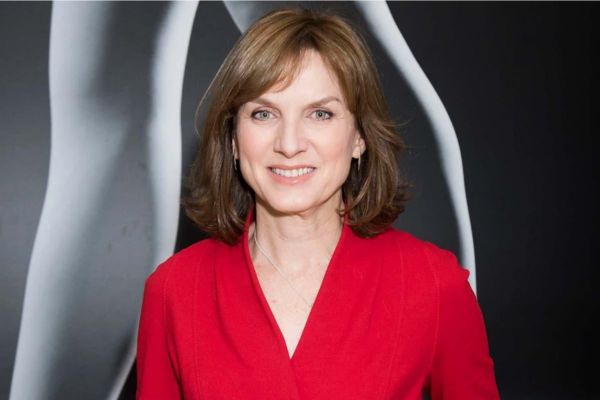
Few names carry as much weight in British broadcasting as Fiona Bruce. For over three decades, she has been a fixture on our screens, moving effortlessly between hard-hitting news, cultural institutions like Antiques Roadshow, and the political battleground of Question Time. Yet what makes Fiona Bruce genuinely remarkable isn’t just her longevity. It’s the sheer breadth of roles she’s taken on, often being the first woman to do so.
Born on 25 April 1964, Fiona Elizabeth Bruce began her professional life far from a newsroom. She worked in advertising and even ran her own management consultancy before making the leap into journalism. That background, though unusual for a broadcaster, arguably gave her a sharper commercial instinct than many of her peers, one that has served her well throughout a career built on adaptability rather than a single specialism.
From Panorama Researcher to National Newsreader
Fiona Bruce joined the BBC in 1989 as a researcher on Panorama, the corporation’s flagship current affairs programme. It wasn’t a glamorous starting point, but it was the right one. She worked her way up steadily, becoming a reporter for both Panorama and Newsnight before landing a role on Public Eye, an investigative series that further sharpened her journalistic instincts.
By 1999, Bruce had joined BBC News at Six, and it wasn’t long before she made history. She became the first female newsreader on BBC News at Ten, a milestone that mattered enormously at a time when British television news remained heavily dominated by male anchors. That achievement alone would define most careers, yet for Fiona Bruce, it was merely one chapter in a much longer story.
A Presenter Who Refuses to Be Boxed In
What sets Fiona Bruce apart from many of her broadcasting contemporaries is her refusal to stick to one lane. She spent eight years co-presenting Crimewatch, tackling genuinely difficult subject matter with the same composure she brought to the evening news. Meanwhile, she also fronted Real Story, an investigative documentary series that allowed her to dig deeper into stories the news bulletins couldn’t fully cover.
Her range extends into the arts world too. Since 2008, she has been the lead presenter of Antiques Roadshow, a programme that couldn’t feel more different from breaking news yet plays perfectly to her warmth and curiosity on camera. She also co-hosts Fake or Fortune? alongside art expert Philip Mould, a show dedicated to investigating the murky provenance of artworks, which has become something of a cult favourite among British viewers.
Documentaries and Royal Access
Beyond her regular programming, Fiona Bruce has written and presented several high-profile documentaries that showcase her interviewing skill. She secured an exclusive interview with Cherie Blair and unprecedented access to Downing Street for The Real Cherie in 2006. She also landed a full-length interview with Bill Gates upon his departure from Microsoft, a genuine journalistic coup at the time.
Her royal credentials are equally impressive. Bruce presented BBC One’s coverage of the Royal Wedding and interviewed Prince Philip in a special programme marking his 90th birthday. She’s also spoken with Prince Charles for Victoria: A Royal Love Story, a documentary she both wrote and presented herself, further proving that her talents stretch well beyond simply reading an autocue.
Taking Over Question Time
Perhaps the most significant turning point in her career came on 10 January 2019, when Fiona Bruce took over as host of Question Time. Succeeding David Dimbleby was never going to be straightforward, given how closely audiences associated him with the programme. However, Bruce brought her own steady, no-nonsense style to the role, quickly establishing herself as a presenter capable of keeping politicians on their toes.
Hosting Question Time places her at the centre of British political discourse every single week, and that’s no small responsibility. She has to referee heated debates between politicians, journalists, and members of the public, all while remaining scrupulously impartial. It’s a demanding balancing act, yet Bruce has largely managed to maintain the show’s credibility during a particularly polarised era in UK politics.
Awards, Recognition, and a Few Lighter Moments
Fiona Bruce’s professional achievements have been recognised repeatedly throughout her career. She has won the Television and Radio Industry Award for Best Presenter three times, alongside being named Newscaster of the Year and receiving the Michael Elliott Award for Television Presentation. These aren’t minor accolades; they reflect sustained excellence across multiple genres of broadcasting, from hard news to entertainment formats.
Interestingly, Bruce has also shown a lighter, more playful side over the years. She’s appeared on Top Gear as a “Star in a Reasonably Priced Car,” featured on Would I Lie to You?, and even had a memorable cameo as the Reverend Fiona Bruce in a Comic Relief edition of The Vicar of Dibley. In 2010, she was awarded the “Rear of the Year” title, though she later described accepting it as “hypocritical,” calling the award itself “demeaning.”
Life Away From the Cameras
Fiona Bruce met her husband, Nigel Sharrocks, while working in advertising; he was director of the agency at the time. The couple married in July 1994 in Islington, London, and went on to have two children, a son born in January 1998 and a daughter born in November 2001. Their main residence is in Belsize Park, London, with a second home tucked away in Sydenham, Oxfordshire.
Notably, Bruce has been vocal about her decision to avoid social media entirely. Back in 2014, she explained that this choice stemmed largely from the misogynistic abuse so often directed at female celebrities online. It’s a decision that feels increasingly relevant given how public discourse has evolved since, and it says something about her priorities beyond simply maintaining a public profile.
A Role Beyond Broadcasting
What many people don’t realise is that Fiona Bruce holds significant responsibilities outside television altogether. She currently serves as the UK Special Envoy for Freedom of Religion or Belief, a role that places her squarely within international diplomacy and human rights advocacy. She’s also Co-Chair of the All-Party Parliamentary Group for North Korea and Vice-Chair of the equivalent group focused on Freedom of Religion or Belief.
In 2022, Bruce was elected Chair of the International Religious Freedom or Belief Alliance, a coalition spanning 42 countries, and she was subsequently re-elected for a second term in 2023. She previously served on the Parliamentary Joint Committee on Human Rights for five years as well. Taken together, these roles reveal a side of Fiona Bruce that rarely makes headlines, yet arguably reflects some of her most meaningful work.
Fiona Bruce’s career defies easy categorisation, and that’s precisely what makes her such an enduring figure in British public life. She’s been a trailblazing newsreader, a trusted political moderator, a documentary maker, and now, increasingly, a serious voice in international human rights. Whether she’s grilling politicians on Question Time or appraising a dusty vase on Antiques Roadshow, Fiona Bruce continues to prove that versatility, not specialism, is what keeps a broadcaster relevant for over thirty years.
