

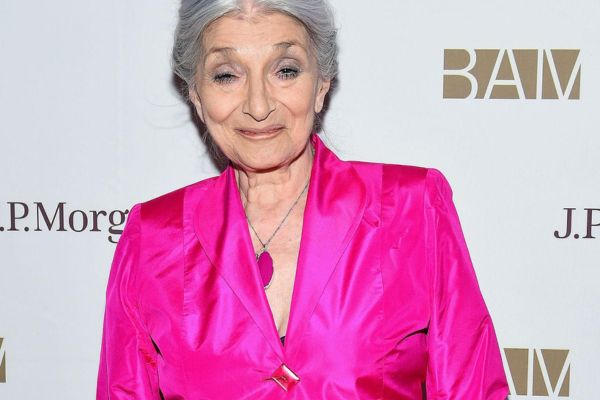
Jane Lapotaire was not the kind of actress who simply performed a role. She inhabited it soul first, bones second. Over a career spanning more than six decades, she carved out a reputation as one of Britain’s most formidable stage and screen talents, a woman whose personal resilience was as remarkable as her professional achievements. For anyone unfamiliar with her story, it is both humbling and utterly riveting.
A Childhood That Could Have Broken Anyone
Born on 26 December 1944 in Ipswich, Suffolk, Jane Lapotaire’s beginnings were, to put it plainly, extraordinarily difficult. Her French mother abandoned her at just six months old, and she never knew her biological father. She was taken in by a foster carer she came to call Granny Grace — a woman who offered her the stability that her own mother could not. When Jane was twelve, her mother came back to reclaim her. Jane chose to stay with Grace. That decision, quiet but resolute, tells you a great deal about the woman she would become.
Both her mother and de facto stepfather actively discouraged her acting ambitions. That opposition, rather than deterring her, seems to have only sharpened her determination. She applied to RADA and was turned down. Most people would have walked away at that point. Jane Lapotaire applied instead to the Bristol Old Vic Theatre School, was accepted, and trained there from 1961 to 1963. It was the beginning of everything.
From Bristol to the Old Vic: Building a Foundation
After completing her training, Lapotaire joined the Old Vic Theatre Company and made her professional debut as Ruby Birtle in J.B. Priestley’s When We Are Married. It was a modest start, but a significant one. She subsequently moved to the newly formed National Theatre, where she built her craft steadily in supporting roles — learning, watching, sharpening her instincts night after night.
She later became one of the co-founders of the Young Vic Theatre, taking on leading roles including Katherine in The Taming of the Shrew and Jocasta in Oedipus. These were not lightweight assignments. They demanded technical precision and emotional depth in equal measure, and by all accounts she delivered both with considerable authority. The stage was clearly where she felt most alive.
Piaf: The Role That Changed Everything
If there is a single performance that defines Jane Lapotaire’s legacy, it is undoubtedly her portrayal of Édith Piaf. In 1978, she took on the title role in Pam Gems’ play Piaf for the Royal Shakespeare Company, first in Stratford-upon-Avon and then in London’s West End. The production was a sensation. Critics and audiences alike were astonished by the sheer physicality and emotional truth she brought to the role of the iconic French chanteuse.
The show transferred to Broadway in 1981, and the American reception was equally rapturous. The New York Times noted that her performance burned with a heart-stopping intensity that made her embodiment of the “little sparrow” feel entirely authentic. That same year, she won the Tony Award for Best Actress in a Play — a remarkable achievement for any British actress working on Broadway. She had already won the Laurence Olivier Award for the same role in 1979, making her one of the rare performers to win both the Olivier and the Tony for the same performance.
It is worth pausing on what this achievement actually meant. Lapotaire was not a household name in the way that some film stars are. She was, fundamentally, a theatre actress someone who built her reputation performance by performance, night by night. Winning Broadway’s highest honour was not just a career milestone; it was a vindication of a path she had chosen against considerable opposition.
Shakespeare, the RSC, and a Career Defined by Range
Throughout the 1980s and 1990s, Lapotaire remained closely associated with the Royal Shakespeare Company, taking on some of Shakespeare’s most demanding roles. She played Gertrude opposite Kenneth Branagh’s Hamlet in the celebrated 1992–93 production directed by Adrian Noble. It was precisely the kind of role — complex, morally ambiguous, emotionally layered that suited her particular gifts.
She also played the Duchess of Gloucester in Richard II alongside David Tennant in the 2013 RSC production, and Queen Isobel in Henry V two years later. Furthermore, she won the Variety Club of Great Britain Best Stage Actress award for Shadowlands, the C.S. Lewis drama that toured extensively. Each role added another dimension to what was already an impressively varied body of work.
Screen Work: Television and Film
Although the stage was always her primary home, Jane Lapotaire made a significant mark on screen as well. Her television work in particular earned considerable recognition. She played the title role in the 1977 BBC miniseries Marie Curie, earning a BAFTA nomination for her portrayal of the pioneering scientist a performance that first brought her to wider public attention.
She received a second BAFTA nomination for Blind Justice in 1988, in which she played a left-wing feminist barrister. Her film credits include Lady Jane (1986), Surviving Picasso (1996) alongside Anthony Hopkins, and Eureka (1983) with Gene Hackman. In later years, she appeared as the Russian aristocrat Irina Kuragin in Downton Abbey, and her brief but distinctive appearance in The Crown further introduced her to a new generation of viewers.
Surviving a Brain Haemorrhage
In February 2000, at the height of her career, Jane Lapotaire collapsed and was rushed to hospital with a subarachnoid brain haemorrhage. The prognosis was uncertain. Recovery, doctors warned, could take years — and there was no guarantee she would return to the stage at all. She subsequently wrote about this experience in her memoir Time Out of Mind (2005), a book that is, by any measure, a remarkable piece of writing. Honest, unsentimental, and deeply personal, it traces the long and frequently frightening journey back to herself.
That she did return to performing was, in itself, a testament to her extraordinary tenacity. Moreover, that she returned at the level she did continuing to work with the RSC, continuing to appear in high-profile productions speaks to a discipline and dedication that few performers can match.
Memoirs and the Written Word
Lapotaire was also a gifted writer. In addition to Time Out of Mind, she wrote Grace and Favour (1989) and Everybody’s Daughter, Nobody’s Child (2007), both of which examined the complex and painful terrain of her childhood. These books did not read like celebrity memoirs in the conventional sense. They were searching, honest, and at times genuinely difficult precisely what you might expect from someone who had spent her career exploring the full range of human emotion from the stage.
Her willingness to examine her own life with such clarity, and to share it publicly, gave readers a rare insight into the inner world of an actress who had, for so long, channelled everything into her performances.
Recognition, Honour, and a Final Tribute
In the 2025 King’s Birthday Honours, Jane Lapotaire was awarded the CBE Commander of the Order of the British Empire — for her services to drama. It was a long overdue formal recognition from the establishment, though those who had followed her career needed no official confirmation of her stature.
Sadly, she passed away on 5 March 2026, aged 81. The Royal Shakespeare Company paid tribute immediately, describing her as “a truly brilliant actress” whose RSC credits represented some of the finest theatrical work of her generation. The response from the wider arts community reflected the depth of affection and respect in which she was held not merely as a performer, but as a person of uncommon courage and integrity.
A Legacy That Deserves to Endure
Jane Lapotaire leaves behind a legacy that is, in every sense, hard-won. She overcame a painful childhood, professional rejection, critical illness, and the natural difficulty of building a serious stage career in an era when television and film increasingly dominated public attention. Through all of it, she remained committed to the craft to the idea that theatre matters, that language matters, that telling human stories truthfully is one of the most important things a person can do.
Her Tony Award, her Olivier Award, her BAFTA nominations, and her CBE are markers of an extraordinary career. But perhaps the truest measure of Jane Lapotaire is simpler than any of that: she was an actress who never stopped trying to get it right. And more often than not, she did.
