

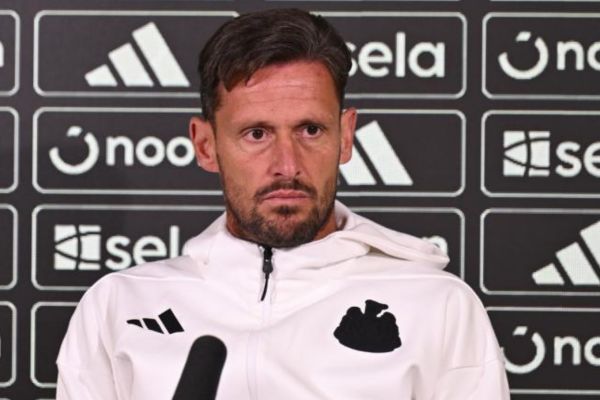
Every successful manager needs someone willing to fight the battles he can’t fight himself, and for Eddie Howe, that person is Jason Tindall. As Newcastle United’s assistant manager, Tindall has become one of the most recognizable figures on Premier League touchlines, not because he seeks attention, but because his combative style demands it. His story stretches from a modest playing career to genuine silverware at the top level of English football.
Who Is Jason Tindall?
Jason Tindall Born on November 15, 1977, Jason James Tindall is an English football coach and former defender who now serves as assistant manager at Newcastle United. Long before reaching the Premier League, he developed his footballing instincts at Senrab F.C., a respected east London youth club founded by his father, Jimmy. There, he played alongside future professionals like Lee Bowyer, learning the game in a setting that valued grit over polish.
Tindall’s early path included brief stints in the youth systems at Arsenal and Charlton Athletic, though neither turned into a lasting opportunity. Eventually, he signed with Bournemouth in 1998, a move that would define the next two decades of his career. What started as a routine free transfer turned into a defining partnership, one that would eventually reshape an entire football club’s trajectory.
A Playing Career Built on Resilience
As a player, Tindall made more than 170 appearances for Bournemouth, primarily as a central defender after being repositioned from midfield. His career wasn’t without setbacks; a recurring knee injury sidelined him for the entire 2004–05 season, forcing him to seek surgery in the United States. Still, he returned to action and continued contributing to the club, showing the same resilience that would later define his coaching career.
After being released by Bournemouth in 2006, Tindall joined nearby Weymouth, where he later became player-manager in 2007. That first managerial experiment proved difficult; he was sacked within a year after a rough season. However, this setback didn’t end his coaching ambitions. Instead, it set the stage for a return to Bournemouth that would completely change the direction of his career.
The Partnership With Eddie Howe
In 2008, Tindall returned to Bournemouth as assistant manager, working under Jimmy Quinn during a difficult stretch near the bottom of the table. When Quinn was sacked in January 2009, Eddie Howe stepped in as caretaker manager, and Tindall stayed by his side. Together, they formed what became the youngest managerial partnership in the Football League at the time, immediately turning results around.
That early success wasn’t a fluke. Howe and Tindall guided Bournemouth from the brink of relegation into League Two survival, then propelled them through League One, the Championship, and eventually into the Premier League itself. Along the way, they secured three promotions in six seasons, an achievement that remains remarkable given the club’s limited resources compared to traditional Premier League sides.
From Burnley to a Solo Managerial Run
Interest in the duo grew as their reputation spread, and in January 2011 they briefly agreed to join Burnley before reversing course and returning to Bournemouth. This loyalty paid off years later when Bournemouth reached the Premier League for the first time in club history. After Bournemouth’s relegation in 2020, though, Howe departed, and Tindall finally got his chance to lead as manager in his own right.
Unfortunately, that opportunity didn’t go smoothly. Tindall was sacked in February 2021 after just six months, following a poor run of results that left the club struggling. Rather than fading from the sport, he took a coaching role at Sheffield United, sharpening his skills away from the spotlight. That experience prepared him for what came next: reuniting with Howe at Newcastle United.
Life as Newcastle’s Assistant Manager
Since November 2021, Tindall has served as Eddie Howe’s assistant at Newcastle United, helping oversee one of the Premier League’s most ambitious rebuilding projects. Their partnership has already delivered tangible success, including the EFL Cup during the 2024–25 season, Newcastle’s first major trophy in decades. For a club that had gone so long without silverware, that achievement carried enormous significance for players and supporters alike.
Beyond results, Jason Tindall has developed a distinct reputation on the touchline that sets him apart from most assistant coaches. Tall, animated, and instantly recognizable, he communicates constantly with fourth officials, opposition staff, and even rival managers during matches. Newcastle fans affectionately nicknamed him “Mad Dog” because of this intensity, and they’ve even dedicated a stadium chant to him during recent seasons.
Why Rival Managers Notice Him
Jason Tindall demonstrative style hasn’t always endeared him to opponents. Reports suggest former Liverpool manager Jürgen Klopp found his antics irritating, while Arsenal’s Mikel Arteta has also expressed frustration during matches against Newcastle. More recently, Aston Villa manager Unai Emery became embroiled in a heated touchline exchange with Tindall, an incident that led to both a coaching staff member and Tindall being sent to the stands.
Despite these clashes, Howe has consistently defended his assistant’s behavior, noting that protecting teammates sometimes requires standing firm under provocation. Inside the club, players reportedly view Tindall very differently than his rivals do. He’s described as fun, approachable, and central to training ground morale, functioning as the crucial link between Howe’s tactical vision and the squad’s day-to-day mentality.
The Bigger Picture
What makes Jason Tindall’s career genuinely compelling isn’t just the trophies or the touchline drama; it’s the consistency of his partnership with Eddie Howe across multiple clubs and nearly two decades. Few coaching duos maintain that level of loyalty through relegations, promotions, and career setbacks. That continuity has clearly built trust, both within the dressing room and in how Newcastle United approaches high-pressure moments.
Ultimately, Jason Tindall represents something increasingly valuable in modern football: an assistant manager who complements his boss’s calm demeanor with unapologetic intensity. Whether he’s marshaling a defense as a player, rebuilding a club as an interim manager, or agitating rival staff from the touchline, he brings genuine substance to every role he’s held. His journey from Senrab F.C. to Premier League silverware proves that football success often depends as much on partnership and persistence as it does on individual talent.
