

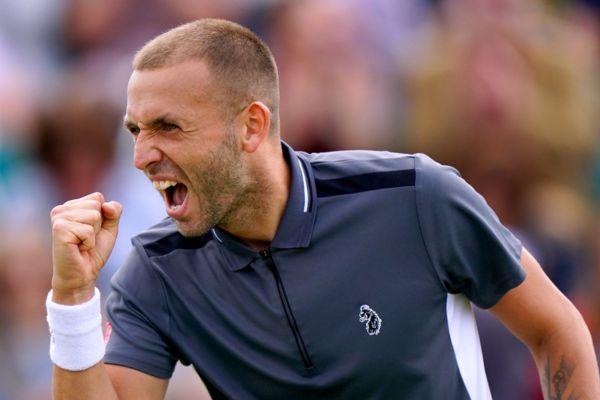
There’s something almost poetic about Dan Evans. He isn’t the tallest player on tour. He doesn’t hit the ball harder than anyone else. He certainly doesn’t have the glossy, media-trained persona of a modern sporting star. Yet here he is — more than two decades into his professional career — still competing, still scrapping, and still capable of turning heads at the biggest tournaments in the world. British tennis has never quite produced anyone quite like him.
A Birmingham Boy Who Did It His Way
Dan Evans was born on 23 May 1990 in Birmingham, a city better known for its industrial heritage than its tennis courts. He grew up in Hall Green, the son of an electrician and a nurse, and began playing sport at age seven — squash first, funnily enough — before stumbling upon tennis at ten years old. He joined the Edgbaston Priory Club and quickly showed the kind of natural ability that persuaded the Lawn Tennis Association to take notice. By thirteen, he had relocated to Loughborough to train at the LTA academy, living with a host family while his peers were still kicking about on school playgrounds.
It was an unconventional upbringing by any standard, and in many ways, it shaped the unconventional player he became. Evans never carried the polished air of a privately educated tennis prodigy. What he had instead was grit, creativity, and a game built on wit rather than brute power.
The Playing Style That Sets Him Apart
A Tactician in a World of Baseliners
Ask any tennis analyst what makes Dan Evans so tricky to play against, and they’ll likely tell you the same thing: he doesn’t play like anyone else. In an era dominated by powerful baseliners who trade thunderous groundstrokes from the back of the court, Evans operates differently. He plays with a flat, sliced backhand the one-handed variety that skids low and disrupts rhythm. He moves forward with purpose, using the slice to set up volleys and short balls in ways that frustrate opponents used to predictable exchanges.
His forehand can be lethal when he finds his range, and his serve, while not a weapon in the traditional sense, is intelligent and well-placed. What Evans lacks in raw firepower, he more than compensates for with court craft and variation. He’s the kind of player who can dismantle a top-ten opponent not by overpowering them, but by simply making the match feel uncomfortable from start to finish.
Titles, Results, and Career Highs
Evans turned professional in 2006 and spent several years grinding through the lower rungs of the tour — Futures, Challengers, and the occasional ATP main draw wildcard. Progress was steady rather than explosive. He claimed his first significant ATP result in 2017, reaching the final of the Sydney International before losing to Gilles Müller. That same year, he made a notable run at the Australian Open, reaching the fourth round still one of his finest Grand Slam performances.
Over time, the titles followed. He won the Murray River Open in Melbourne in 2021 and then claimed his biggest career title at the Washington Open in 2023, defeating a field that included several top-ranked players. By August of that year, he had climbed to a career-high ranking of world No. 21 an achievement that, given everything he had been through, felt genuinely remarkable.
Beyond individual titles, Evans played a crucial role in Great Britain’s Davis Cup winning campaign in 2015. He represented his country in 22 ties throughout his career, consistently proving himself one of the most reliable members of the British squad alongside Andy Murray.
The Suspension That Could Have Ended Everything
A Year Away From Tennis
No honest account of Dan Evans would be complete without addressing the most difficult chapter of his career. In 2017, Evans tested positive for cocaine and received a one-year ban from professional tennis. It was a moment that threatened to end his career entirely, and in the weeks that followed the announcement, it was far from certain that he would return.
But he did return. And in many ways, the ban became a turning point rather than a full stop. Evans has spoken openly about the experience since, acknowledging the mistake with a candour that many public figures fail to manage. He came back humbled, more focused, and arguably a better professional than he had been before. The years that followed his return produced the best tennis of his career, which speaks volumes about the character of the man.
It was also during this period that he met Aleah, his long-term partner, who supported him through the ban and has been by his side ever since. The couple, who share a surname and live together in Cheltenham, have remained notably private about their relationship neither confirming nor denying reports of a marriage. What’s clear, however, is that Aleah’s steadfast support has been a stabilising force throughout Evans’s career.
Life Off the Court
A Private Man in a Very Public Sport
In an age where tennis players manage personal brands with the precision of marketing agencies, Dan Evans is refreshingly different. His Instagram presence is modest, his media appearances relatively low-key, and his personal life is kept deliberately out of the spotlight. He doesn’t chase attention. He doesn’t perform for cameras. What you see on the court is, by all accounts, what you get off it.
Evans has spoken warmly about life in Cheltenham, where he and Aleah settled and built something resembling a normal existence between tournaments. “It’s easy to be around here,” he once said in a local interview. “It’s got a good coffee shop, which always helps.” It’s the kind of quote that tells you everything about who Dan Evans is quietly content, grounded, and entirely unbothered by the trappings of sporting celebrity.
His father David, an electrician, and his mother Bernadette, a nurse, remain a strong presence in his life. He hasn’t forgotten where he came from, and that sense of groundedness shines through in how he carries himself both on and off the court.
Where Dan Evans Stands Today
Still Competing, Still Relevant
Now 36 years old, Dan Evans finds himself at a stage in his career where most players would be winding down. His current ATP ranking sits around No. 205, a significant drop from the heights of 2023. A four-month absence from the tour following a first-round qualifying exit at the 2026 Australian Open raised questions about what comes next. Yet Evans has shown time and again that writing him off is a mistake.
His entry into French Open qualifying in May 2026 signalled a desire to keep competing at the highest level. It may not be a fairytale comeback, but it’s consistent with who Evans has always been a fighter who refuses to go quietly. He has earned over $9.3 million in career prize money and built a legacy that extends well beyond statistics and rankings.
What His Career Means for British Tennis
Dan Evans will never be Andy Murray. He knows that, and so does everyone else. But what he represents for British tennis is perhaps more important than any individual title. He is proof that a working-class kid from Birmingham can make it to the top of professional sport through sheer perseverance. He is proof that setbacks even serious, self-inflicted ones do not have to define a career. And he is proof that a player doesn’t need a powerful serve or a powerful story to earn genuine respect on the ATP Tour.
In many ways, Dan Evans is the most honest thing in British tennis. No pretence, no polish, no performance. Just a bloke from the Midlands who loves the game, plays it brilliantly, and keeps showing up — and that, ultimately, is what makes him worth watching.
