

Understanding the Importance of a Psoas Muscle Stretch
Many people focus on stretching their hamstrings, calves or shoulders, yet they often overlook one of the most important muscles in the body: the psoas. A proper psoas muscle stretch can improve mobility, reduce stiffness and help relieve discomfort that develops from modern lifestyles. Because many people spend long hours sitting at desks, driving or using digital devices, the psoas frequently becomes tight and restricted.
The psoas muscle plays a central role in everyday movement. It connects the lower spine to the upper thigh and acts as one of the body’s primary hip flexors. Every time you walk, climb stairs, run or stand from a seated position, this muscle becomes active. Consequently, maintaining its flexibility can significantly influence how your body feels and performs.
What Is the Psoas Muscle?
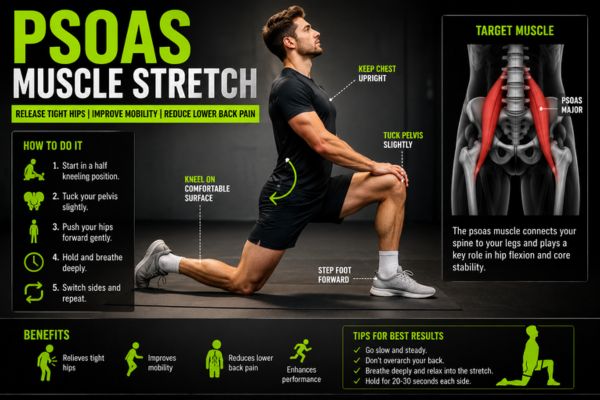
The psoas is a deep muscle located in the core of the body. It originates from the lumbar spine and extends down to the femur. Together with the iliacus muscle, it forms the iliopsoas muscle group, which is responsible for lifting the leg and stabilising the spine during movement.
Unlike many superficial psoas muscle stretch that are easy to see and feel, the psoas sits deep within the body. As a result, people often remain unaware of its condition until tightness begins affecting movement patterns. When this happens, discomfort may appear in unexpected areas such as the lower back, hips, pelvis or even the knees.
Understanding the function of the psoas helps explain why stretching it can have such a positive impact on overall mobility and physical wellbeing.
Why the Psoas Muscle Becomes Tight
Prolonged Sitting
One of the most common causes of psoas tightness is prolonged sitting. During seated activities, the hips remain flexed for extended periods, causing the muscle to stay in a shortened position. Over time, this can reduce flexibility and limit normal movement.
Modern lifestyles encourage sitting more than ever before. Office work, commuting and leisure activities often involve spending hours in a chair. Consequently, many people develop tight hip flexors without even realising it.
Lack of Movement
A sedentary lifestyle contributes significantly to muscle tightness. When the body does not move through a full range of motion regularly, muscles gradually lose flexibility. The psoas is particularly vulnerable because it plays such an important role in hip movement.
Regular physical activity helps maintain healthy muscle function. However, inactivity allows stiffness to develop, making a psoas muscle stretch increasingly beneficial.
Intense Physical Activity
Interestingly, athletes can also experience tight psoas muscles. Runners, cyclists and football players repeatedly engage the hip flexors during training and competition. Without proper recovery and stretching, the muscle may become overworked and restricted.
Therefore, both inactive individuals and highly active athletes can benefit from including psoas stretches in their routines.
Benefits of a Psoas Muscle Stretch
Improved Hip Mobility
One of the most noticeable benefits of a psoas muscle stretch is enhanced hip mobility. Flexible hip flexors allow the joints to move more freely, making everyday activities feel easier and more comfortable.
Improved mobility can also support better athletic performance. Whether you enjoy running, cycling or strength training, greater freedom of movement often leads to more efficient mechanics and reduced strain.
Better Posture
Tight psoas muscles can pull the pelvis forward, contributing to poor posture and excessive arching of the lower back. Stretching helps reduce this tension and encourages more balanced alignment throughout the body.
As posture improves, many people notice reduced discomfort and greater ease during standing and walking. Furthermore, improved posture often enhances confidence and overall physical presence.
Reduced Lower Back Tension
The relationship between the psoas and lower back is particularly significant. Because the muscle attaches directly to the lumbar spine, excessive tightness can place additional stress on this area.
A consistent stretching routine may help relieve tension and improve comfort. While stretching is not a cure for all back pain, it often forms a valuable part of a broader mobility and wellness strategy.
How to Perform a Basic Psoas Muscle Stretch
Kneeling Hip Flexor Stretch
The kneeling hip flexor stretch is one of the most effective ways to target the psoas. Begin by kneeling on one knee while placing the opposite foot flat on the floor in front of you. Maintain an upright posture and gently move the hips forward until you feel a stretch at the front of the hip.
Hold the position for approximately twenty to thirty seconds while breathing steadily. Afterwards, switch sides and repeat. The movement should feel controlled and comfortable rather than painful.
Many people make the mistake of arching the lower back excessively. Instead, keep the core engaged and gently squeeze the glutes to enhance the effectiveness of the stretch.
Other Effective Psoas Stretch Variations
Low Lunge Stretch
The low lunge stretch provides a deeper stretch for the hip flexors while also improving balance and stability. This variation is commonly used in yoga and mobility programmes because it effectively opens the front of the hips.
As you move into the lunge position, focus on maintaining proper alignment. Gradually shift the hips forward while keeping the chest lifted and shoulders relaxed. This approach helps maximise the stretch without placing unnecessary strain on the lower back.
Standing Hip Flexor Stretch
For individuals who find kneeling uncomfortable, the standing hip flexor stretch offers a practical alternative. This variation can be performed almost anywhere, making it particularly useful during work breaks or while travelling.
Although the stretch may feel less intense, it still provides valuable benefits when performed correctly and consistently.
Thomas Stretch
The Thomas stretch is often used by physiotherapists and fitness professionals to specifically target the psoas. Performed on the edge of a bench or bed, it allows the leg to extend naturally while creating a deep stretch through the front of the hip.
Because of its effectiveness, many experts consider this one of the best options for addressing chronic hip flexor tightness.
Common Mistakes to Avoid
Many people perform stretches too aggressively, believing that greater discomfort equals better results. In reality, overstretching can irritate muscles and reduce the effectiveness of the exercise. Instead, focus on gentle, controlled movements that gradually increase flexibility over time.
Another common mistake involves holding the breath. Proper breathing helps muscles relax and allows the body to move more naturally into the stretch. Therefore, maintaining slow and steady breaths should always be part of the process.
Poor posture during stretching can also limit results. Keeping the spine aligned and the core engaged ensures the psoas receives the intended stretch.
How Often Should You Stretch the Psoas?
Consistency matters more than intensity when improving flexibility. Performing a psoas muscle stretch several times each week often produces better results than occasional lengthy sessions.
Many fitness professionals recommend stretching daily, especially for individuals who spend significant time sitting. Even a few minutes each day can help counteract the effects of prolonged inactivity and support healthier movement patterns.
Additionally, stretching after exercise may enhance recovery and reduce feelings of stiffness. Combining stretching with strengthening exercises often delivers the most balanced and sustainable results.
Who Can Benefit Most from a Psoas Muscle Stretch?
Almost everyone can benefit from improved hip flexibility. Office workers frequently experience relief because stretching helps offset the effects of sitting. Athletes often notice better movement efficiency and reduced muscle tension.
Older adults may also benefit from improved mobility and posture. Furthermore, individuals recovering from periods of inactivity can use stretching as part of a gradual return to movement.
Regardless of age or activity level, maintaining healthy hip function contributes to better overall physical wellbeing.
Final Thoughts
A regular psoas muscle stretch routine can transform the way your body moves and feels. By improving flexibility, supporting posture and reducing tension, this simple practice offers benefits that extend far beyond the hips themselves.
Although the psoas often receives little attention, its influence on movement and comfort is substantial. Therefore, incorporating targeted stretches into your weekly routine can help you move more freely, stand more comfortably and maintain healthier mobility for years to come. Whether you are an athlete, office worker or simply looking to improve your wellbeing, giving attention to this powerful muscle is a worthwhile investment in your long-term health.
